
If you have ever felt sudden jerks while accelerating or noticed strange vibrations coming from the rear wheel of your motorcycle, your bike might be trying to tell you something. Every component in a two-wheeler plays a vital role, but few are as critical for ride comfort and power transmission as the coupling rubber.
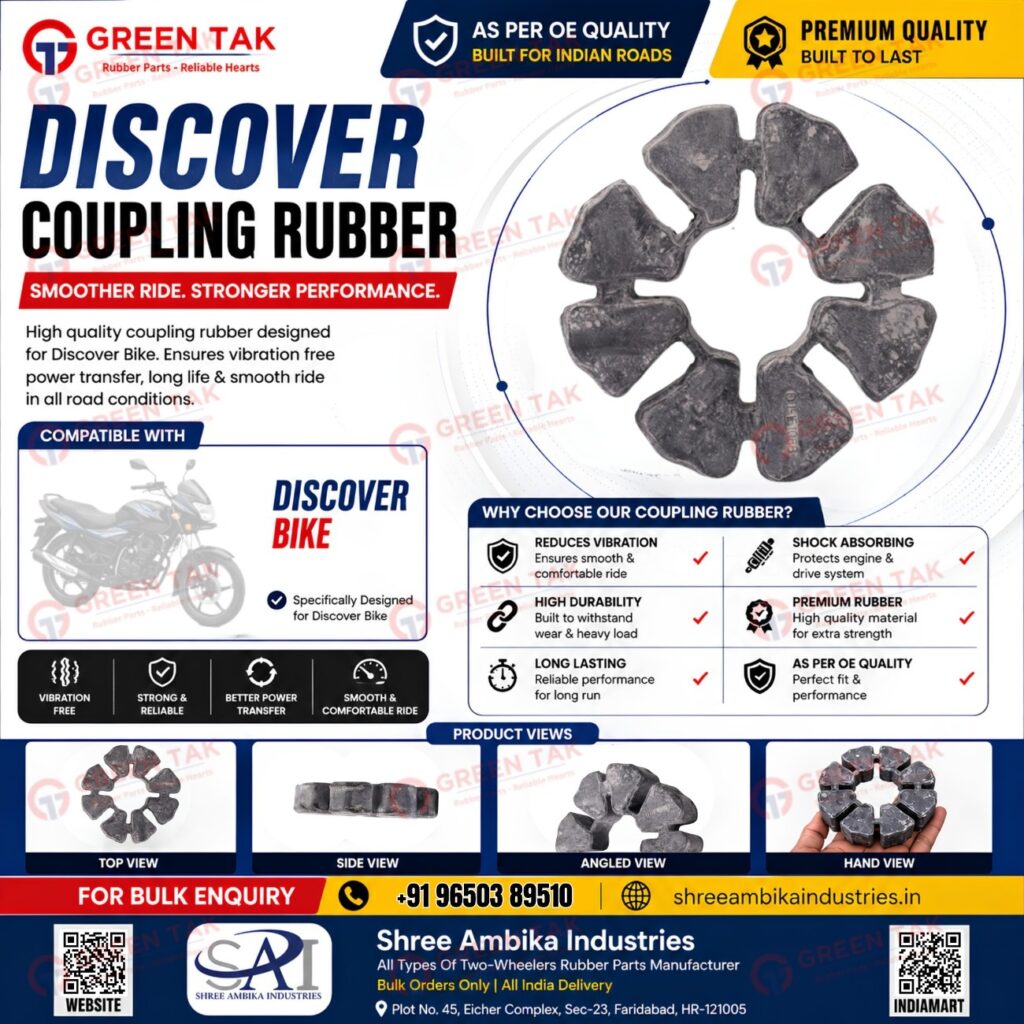
At Shree Ambika Industries, we specialize in manufacturing high-performance two-wheeler rubber parts designed to meet original equipment standards. In this post, we will explore what coupling rubber does, why it wears out, and how choosing quality replacement parts can completely transform your riding experience.
What is Coupling Rubber and How Does It Work?
The coupling rubber (often fitted inside the rear wheel hub assembly) acts as a crucial cushion between the engine’s power output and the wheel. When you twist the throttle, the engine generates rotational force that is transmitted through the chain and sprocket to the rear wheel.
Without a cushion, this sudden transfer of power would create harsh metal-on-metal impacts, damaging your bike’s drivetrain and giving you a very jerky, uncomfortable ride. High-quality coupling rubber absorbs these shocks, ensuring a seamless and vibration-free transfer of power.
Key Benefits of Upgrading Your Coupling Rubber
Choosing premium aftermarket rubber components engineered as per OE quality specifications ensures that your vehicle performs at its best without copyright concerns or compromises. Here is why high-grade coupling rubber is essential:
- Superior Shock Absorption: It protects your engine and drive system by cushioning heavy load impacts.
- Vibration-Free Performance: Enjoy a smoother, more comfortable ride even on rough Indian roads.
- High Durability: Built from premium-grade rubber materials designed to withstand heavy loads and daily wear and tear.
- Long-Lasting Reliability: Engineered for the long run, reducing the frequency of frequent replacements.
Signs That Your Two-Wheeler Needs New Coupling Rubber
Over time, constant friction, heat, and weight cause rubber parts to harden, crack, or lose elasticity. Watch out for these common warning signs:
- Jerky Acceleration: A noticeable lag or sudden thud when you accelerate.
- Excessive Chain Play or Noise: Unusual clunking noises coming from the rear wheel hub area.
- Vibrations: Increased vibrations traveling up through the footpegs and seat.
If you notice any of these symptoms, it is time to inspect your rear wheel cushioning and replace it with reliable parts.
Conclusion
Your two-wheeler takes you through daily commutes and long journeys alike, so its components deserve the best care. Investing in quality coupling rubber not only enhances your comfort but also extends the life of your bike’s drivetrain.
For bulk inquiries, trade requirements, and high-performance two-wheeler rubber parts manufactured with precision, get in touch with us today!
- Website: Shree Ambika Industries
- Connect with us on Social Media: