
A two-wheeler’s fuel system is only as reliable as its smallest components—and one of the most important is the petrol pipe (fuel hose). This simple rubber pipe carries fuel from the tank to the carburetor/fuel system. If the pipe is weak, cracked, loose, or incompatible with today’s fuel blends, it can lead to fuel leakage, poor pickup, hard starting, fuel smell, and unnecessary breakdowns.
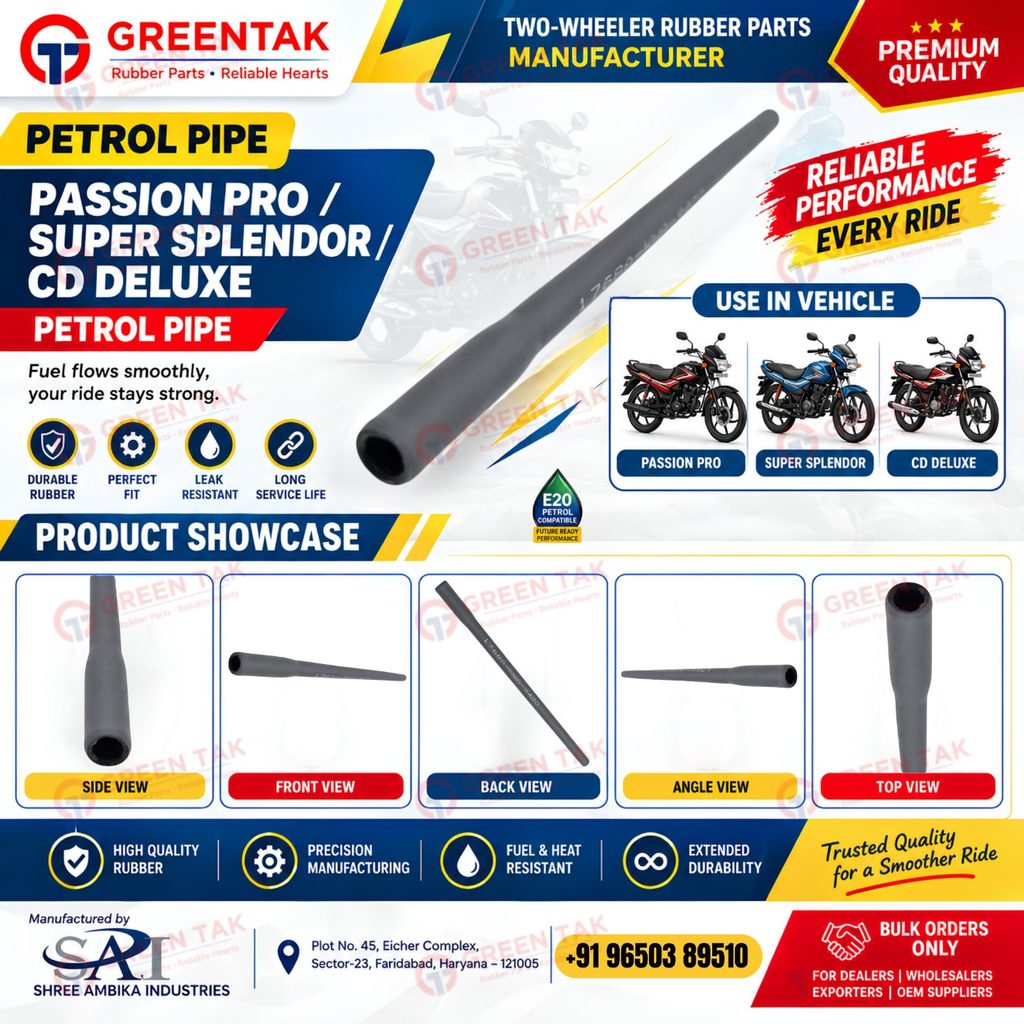
At Shree Ambika Industries, we manufacture two-wheeler rubber parts under the GREENTAK brand with a focus on consistency, durability, and performance for day-to-day riding conditions in India and export markets. In this blog, we’ll explain how to choose the right petrol pipe and why quality matters—especially with E20 petrol becoming more common.
What Is a Petrol Pipe (Fuel Hose) in a Two-Wheeler?
A petrol pipe is a rubber fuel line designed to:
- transfer petrol smoothly from the fuel tank to the engine’s fuel delivery system
- maintain flow under heat and vibration
- prevent leakage at joints and bends
- stay stable over time despite exposure to fuel, temperature changes, and road conditions
Even though it looks like a small part, it directly impacts ride safety and engine performance.
Common Problems Caused by a Low-Quality Petrol Pipe
If a fuel hose is made with inconsistent rubber compound or poor finishing, you may notice:
- Fuel leakage near clamps/joints
- Fuel smell while riding or when parked
- Cracks / hardening of rubber due to heat and fuel contact
- Loose fitting leading to seepage
- Fuel flow restriction causing weak pickup or engine hesitation
- Short service life and frequent replacements
A good petrol pipe should be designed to handle regular heat, vibration, and fuel exposure without losing flexibility or grip.
Why E20 Compatibility Matters Today
Fuel standards are evolving, and ethanol-blended petrol (E20) is becoming increasingly common. Ethanol blends can be tougher on certain materials over time, so a fuel hose should be made to resist fuel exposure and maintain performance.
GREENTAK petrol pipes are developed for real-world usage where fuel & heat resistance and stable rubber performance matter—helping support smooth fuel flow and dependable riding.
Key Features to Look for in a Two-Wheeler Petrol Pipe
When selecting a fuel hose for replacement or bulk distribution, focus on practical, ride-relevant qualities:
1) Durable Rubber Compound
A good petrol pipe should remain flexible and strong, reducing the risk of early cracking or hardening.
2) Leak-Resistant Performance
Proper rubber quality and consistent dimensions help reduce seepage, especially at connection points.
3) Fuel & Heat Resistance
Two-wheelers operate in hot engine bays and varied weather. A quality pipe should be built to perform under heat and continuous fuel contact.
4) Consistent Fit & Finish
Uniform internal diameter and clean finishing help in better installation and steady fuel flow.
5) Long Service Life
For mechanics, retailers, and fleet users, longer life means fewer complaints and better value.
Petrol Pipe Replacement: Simple Tips for Better Results
Whether you are a mechanic, retailer, or a regular rider, these checks help during replacement:
- Match the size (inner diameter and length) with the old pipe
- Use proper clamps where required to avoid leakage
- Avoid sharp bends that can restrict fuel flow
- Keep the pipe away from direct contact with very hot surfaces
- Inspect periodically for hardening, cracks, or seepage
A small preventive replacement at the right time can avoid bigger fuel-system issues later.
GREENTAK Petrol Pipe by Shree Ambika Industries (Manufacturer Supply)
Shree Ambika Industries is a manufacturer of two-wheeler rubber parts in India, supplying the market with components designed for everyday riding demands and trade requirements.
Why buyers prefer manufacturer supply for petrol pipes:
- consistent production and repeatable quality
- bulk availability for distribution channels
- suitable for dealers, wholesalers, exporters, and bulk buyers
- stable packaging and batch consistency for regular ordering
To explore our range and connect with us:
- Website: https://shreeambikaindustries.in/
- Instagram: https://www.instagram.com/shreeambikaindustries/
- Facebook: https://www.facebook.com/profile.php?id=100095072925514
Who Typically Buys Two-Wheeler Petrol Pipes in Bulk?
Demand is steady in the replacement market because petrol pipes are wear-and-tear items. Bulk buyers usually include:
- spare parts dealers and wholesalers
- mechanics and service workshops
- distributors in high two-wheeler usage regions
- exporters serving commuter-bike markets
If you are sourcing for trade, choosing consistent quality helps reduce returns and improves customer satisfaction.
FAQs: Two-Wheeler Petrol Pipe (Fuel Hose)
Q1. How often should a petrol pipe be replaced?
Replacement depends on usage, heat exposure, and fuel conditions. Inspect regularly—if you see cracks, hardness, seepage, or fuel smell, replace it.
Q2. What are the signs of petrol pipe leakage?
Fuel smell, wetness near joints, drops under the bike, or reduced performance can indicate leakage.
Q3. Can a petrol pipe affect pickup and mileage?
Yes. Restricted fuel flow or seepage can impact smooth acceleration and overall performance.
Q4. Why does rubber harden over time?
Heat, fuel exposure, and aging can reduce rubber flexibility. Choosing a quality fuel & heat resistant hose helps improve service life.
Conclusion
A petrol pipe may look like a small component, but it plays a big role in safe riding, smooth fuel flow, and reliable performance. If you are a dealer, wholesaler, or bulk buyer, focusing on durable rubber quality, leak resistance, and fuel/heat resistance helps you deliver better value to your customers.
For bulk enquiries and product details, visit: https://shreeambikaindustries.in/
Follow us for updates:
Instagram: https://www.instagram.com/shreeambikaindustries/
Facebook: https://www.facebook.com/profile.php?id=100095072925514