
A two wheeler head gasket is a small but important engine sealing component. The correct gasket helps seal the relevant engine joint, while an unsuitable or damaged part may contribute to oil seepage, compression-related problems or repeat repairs. Because gasket shapes and layouts vary between engines, appearance alone is not enough to confirm fitment.
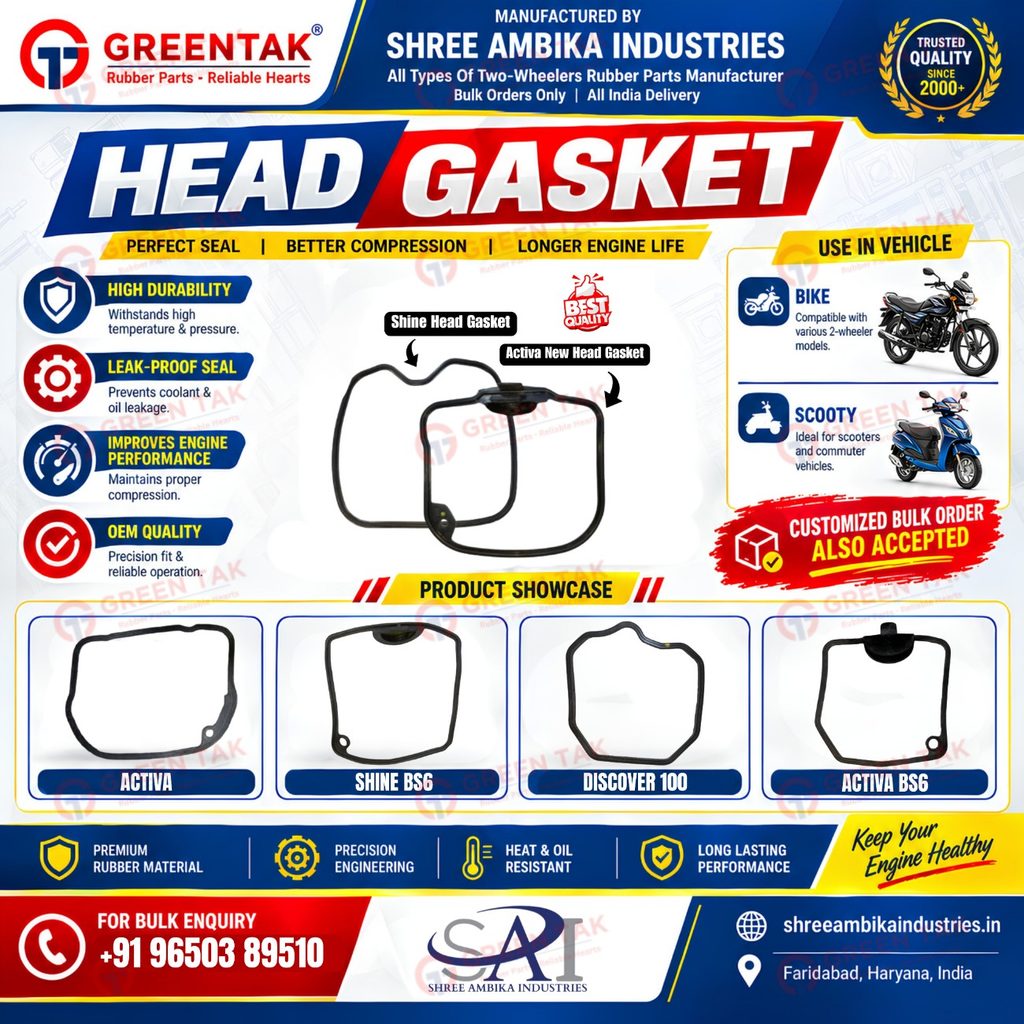
This guide explains the purpose of two-wheeler head gaskets, signs that may indicate a sealing issue, and checks to make before selecting a replacement.
First, identify the correct gasket type
In standard engine terminology, a cylinder-head gasket seals the joint between the cylinder and cylinder head. A head-cover gasket seals a removable engine cover and helps prevent oil seepage from that joint.
These are different parts and are not interchangeable. Names can vary in parts listings, so confirm which engine joint the gasket is designed for before ordering. Vehicle details, a parts-catalogue reference or a clear photo of the old gasket can help with identification.
What does a two wheeler head gasket do?
The function depends on the specific gasket:
- A cylinder-head gasket helps seal combustion pressure and separate oil or coolant passages where the engine design includes them.
- A head-cover gasket helps seal the cover-to-engine joint and reduce oil seepage.
- The gasket’s outline, openings, thickness and bolt-hole positions are designed for a particular application.
Not every two-wheeler engine uses liquid coolant. Coolant-related sealing applies only to engines with coolant passages.
Common signs of a possible gasket problem
A gasket issue may be associated with one or more of these signs:
- Oil seepage around a head or cover joint
- Difficulty starting or uneven engine running
- Possible loss of compression
- Engine overheating or coolant loss on liquid-cooled vehicles
- Persistent leakage after a repair
These symptoms can also have other causes. A mechanic should inspect the engine before a gasket is selected or replaced.
How to choose the right replacement gasket
Before ordering a two wheeler head gasket, check the following:
- Vehicle and engine details: Note the vehicle year, variant and engine identification details.
- Gasket type: Confirm whether the required part is a cylinder-head gasket or a head-cover gasket.
- Part reference: Use an available catalogue reference or compare the old gasket with the replacement.
- Shape and openings: Check the outline, bolt holes, oil or coolant openings and overall dimensions.
- Supplier confirmation: If ordering for a workshop or in bulk, share the relevant vehicle details and a clear photo or sample of the old part.
Do not select a gasket based only on a similar-looking shape. Even small differences in the outline or hole positions can affect fitment.
Replacement and installation considerations
Gasket replacement should be carried out by a qualified mechanic. Before fitting, the mating surfaces should be inspected and cleaned without damaging them. The mechanic should also check for surface damage or warping and follow the correct tightening sequence and torque specifications in the vehicle’s service information.
Use sealant only when specified for that application. A gasket that is damaged or not intended for reuse should be replaced rather than forced into place.
Two-wheeler rubber parts from Shree Ambika Industries
Shree Ambika Industries, under the GreenTak brand, manufactures rubber parts for two-wheeler applications and accepts bulk enquiries. Gasket availability and fitment should be confirmed for the specific vehicle and engine application.
For a fitment or bulk enquiry, share the vehicle year and variant, engine details, required quantity and a clear photo or sample of the existing gasket.
Shree Ambika Industries
Faridabad, Haryana, India
Phone: +91 96503 89510
Website: https://shreeambikaindustries.in/
Facebook: https://www.facebook.com/profile.php?id=100095072925514
Instagram: https://www.instagram.com/shreeambikaindustries/
Frequently Asked Questions
Is the same head gasket used for every two-wheeler?
No. Gasket design and dimensions vary by engine and application. Confirm the part reference and fitment details before ordering.
Is a cylinder-head gasket the same as a head-cover gasket?
No. They seal different engine joints and are not interchangeable. Confirm the exact part required for the repair.
Do all two-wheelers use coolant?
No. Some engines use air cooling, while others use liquid cooling. Coolant-related checks apply only to engines with coolant passages.
Can an oil leak confirm that the gasket has failed?
Not by itself. Oil seepage may come from different seals or joints. Have the source of the leak inspected before replacing a part.