
When a two-wheeler starts feeling jerky during acceleration, makes extra noise from the rear wheel area, or shows unusual vibration on pickup, one commonly ignored part can be the reason—coupling rubber, also known as cush drive rubber or hub damper rubber.
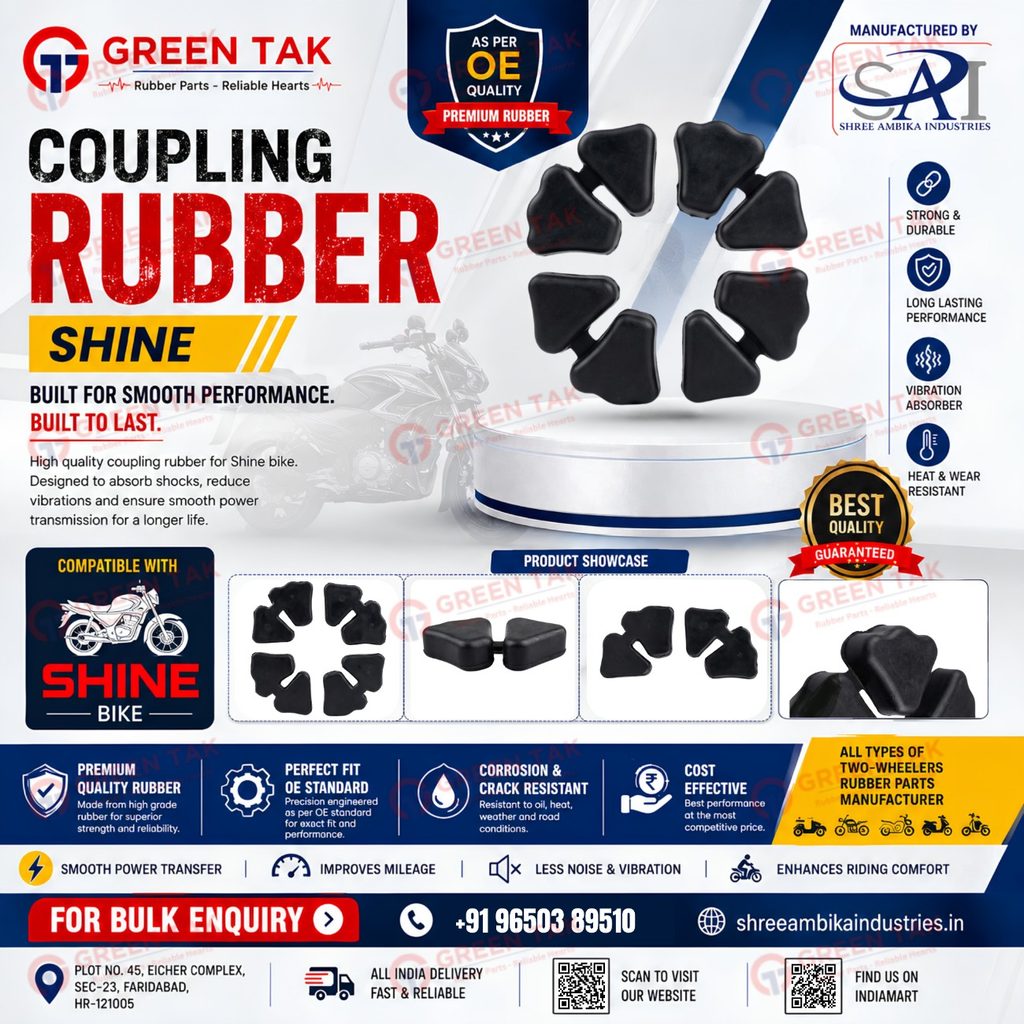
This small rubber set plays a big role in ride comfort and drivetrain protection. In this blog, we’ll explain what coupling rubber does, symptoms of wear, how to choose the right set, and why quality rubber parts matter for workshops, retailers, and bulk buyers.
What Is Coupling Rubber / Cush Drive Rubber?
Coupling rubber is a set of rubber dampers fitted inside the rear wheel hub assembly (commonly in many commuter motorcycles). Its job is to absorb shocks between the engine power delivery and the rear wheel movement.
In simple words, it helps:
- reduce sudden jerks during throttle changes
- control vibration and noise
- support smoother power transfer
- protect hub and drivetrain components from impact load
Why Coupling Rubber Is Important for Daily Commuter Motorcycles
Most commuter bikes in India face tough conditions—stop-and-go traffic, potholes, heavy loads, and variable road quality. Over time, the rear hub coupling rubbers take repeated stress.
A good-quality coupling rubber set helps improve:
- Ride comfort: less vibration felt during pickup
- Smoothness: better feel while accelerating/decelerating
- Component protection: reduces strain on hub parts
- Service life: lowers impact-related wear
Common Symptoms of Worn Coupling Rubber
If your customer complains about these issues, the coupling rubber may need inspection:
1) Jerky acceleration or sudden “clunk” feeling
A worn set allows extra play, causing shock transfer.
2) Increased vibration and noise
When rubber hardens or cracks, it loses damping ability.
3) Rear wheel play / looseness feeling
Excess clearance in the hub can develop over time.
4) Rubber pieces look cracked, flattened, or hardened
Visual inspection often reveals damage.
Tip for workshops: coupling rubber is a low-cost part, but it can make a big difference in “feel” after replacement—customers notice the improvement quickly.
What Causes Coupling Rubber to Wear Faster?
Coupling rubbers typically degrade due to:
- continuous load and torque cycles
- high heat build-up during long rides
- oil/grease exposure (in some cases)
- water and dust ingress
- low-quality rubber compound and inconsistent molding
How to Choose a Good Coupling Rubber Set
When selecting coupling rubber for retail or workshop use, prioritize these factors:
✅ Rubber Compound Quality
A better compound offers consistent elasticity and damping for longer time.
✅ Heat & Wear Resistance
Daily commuting + traffic heat demands rubber that can tolerate long usage.
✅ Crack Resistance
Good rubber should resist premature cracking under stress and road conditions.
✅ Accurate Fit & Shape Consistency
Uniform dimensions are important to avoid play, uneven wear, or noise.
✅ Reliable Manufacturing & Quality Checks
Consistency across batches matters a lot for wholesalers and dealers.
Green Tak Coupling Rubber by Shree Ambika Industries
At Shree Ambika Industries, we manufacture two-wheeler rubber parts designed for dependable performance in Indian riding conditions. Under our product range, Green Tak coupling rubber is built to support:
- strong & durable performance
- vibration absorption for smoother riding
- heat & wear resistance
- long-lasting use in day-to-day commutes
- cost-effective value for retailers and bulk buyers
We supply for bulk requirements with fast, reliable all-India delivery.
Website: https://shreeambikaindustries.in/
Who Should Stock Coupling Rubber?
Coupling rubber is a fast-moving item in many markets. It’s ideal for:
- Two-wheeler spare parts retailers
- Wholesalers and distributors
- Workshop owners & mechanics
- Online resellers of two-wheeler spare parts
- Fleet maintenance and delivery riders’ service points
Bulk Enquiry & Business Support
If you are a retailer/wholesaler and want regular supply of coupling rubber and other two-wheeler rubber parts, we support bulk orders with consistent packaging and supply.
Bulk Enquiry Contact: +91 96503 89510
Location: Faridabad, Haryana (India)
Follow us on social media:
- Facebook: https://www.facebook.com/profile.php?id=100095072925514
- Instagram: https://www.instagram.com/shreeambikaindustries/
FAQs (Coupling Rubber / Cush Drive Rubber)
Q1. How often should coupling rubber be replaced?
It depends on riding conditions and load. Regular city commuting and rough roads can reduce life. Inspection during rear wheel service is recommended.
Q2. Can worn coupling rubber affect mileage or performance feel?
Worn dampers can increase vibration and reduce smoothness in power delivery. Replacement often improves overall ride feel.
Q3. Is coupling rubber the same as hub rubber?
In many cases, yes—people use terms like coupling rubber, hub damper rubber, and cush drive rubber interchangeably depending on region.
Q4. Can workshops replace coupling rubber easily?
Yes. Replacement is usually straightforward during rear wheel hub servicing, but correct fitment and part selection are important.
Conclusion
Coupling rubber may look small, but it directly impacts smoothness, vibration control, and drivetrain protection. For workshops, retailers, and distributors, stocking a dependable coupling rubber set helps deliver better customer satisfaction and repeat sales.
For bulk enquiry and supply, visit Shree Ambika Industries:
https://shreeambikaindustries.in/