
In a commuter motorcycle, small rubber components play a big role in daily comfort and long-term reliability. One such essential part is the coupling rubber (also commonly searched as cush drive rubber / coupler damper rubber / rear hub rubber). Its job is simple: absorb shock between the engine’s power delivery and the rear wheel, reduce jerks, and support smoother acceleration.
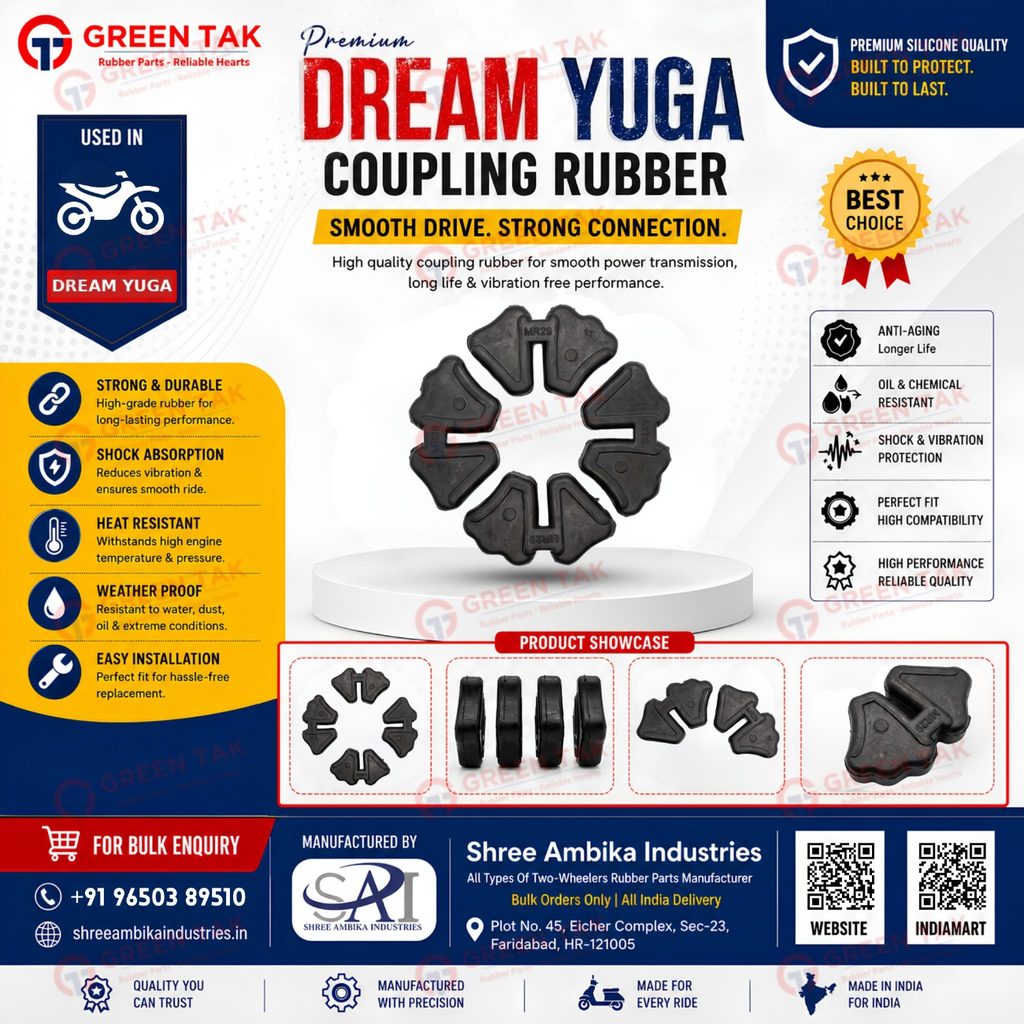
At Shree Ambika Industries (Faridabad, Haryana), we manufacture Green Tak Premium Coupling Rubber for high-usage two-wheelers and regular riding conditions—built for durability, better vibration control, and consistent performance in Indian roads.
What Is Coupling Rubber (Cush Drive Rubber) and Why It Matters?
Coupling rubber sits inside the rear wheel hub assembly and helps:
- Reduce sudden load on drivetrain parts during acceleration/deceleration
- Minimize shock & vibration transfer to the wheel
- Improve ride smoothness and overall driving feel
- Support better longevity of hub-related components
When this rubber wears out, riders often feel more harshness and vibration—especially during pickup or when riding with load.
Common Signs Your Coupling Rubber Needs Replacement
If you notice any of these, it’s a good time to inspect the coupler rubbers:
- Extra vibration or knocking feel from the rear side
- Jerky pickup (especially in stop-and-go traffic)
- Unusual sound around rear hub area
- Loose feel during throttle on/off transitions
- Frequent wear when bike is used heavily (delivery use, daily long routes, rough roads)
Green Tak Premium Coupling Rubber – Built for Indian Riding Conditions
Our coupling rubber set is manufactured with a focus on performance and durability for real-world usage. Key benefits include:
1) Shock Absorption for Smoother Ride
Helps reduce drivetrain shocks and supports vibration-free performance for daily commuting.
2) Strong & Durable Rubber Compound
Designed for long-lasting performance under regular use, helping reduce early wear.
3) Heat Resistance
Withstands heat generated during continuous riding and heavy traffic situations.
4) Oil & Chemical Resistance
Helps maintain performance even when exposed to common contaminants found in workshop/road environments.
5) Weather Protection
Helps resist the effects of dust, moisture, and varying weather conditions—important for year-round riders.
How to Select the Right Coupling Rubber (Avoid Fitment Issues)
Because coupling rubbers can differ by size and hub design, the best way to ensure correct selection is:
- Match your old sample physically (shape/locking design)
- Confirm quantity of pieces in the set
- Verify basic dimensions if required
- For bulk buyers/workshops: share photo of old part + bike details for quick confirmation
This simple check helps reduce return/fitment problems and saves time for workshops and distributors.
Who Buys Coupling Rubber in Bulk?
Coupling rubber has consistent demand in:
- Two-wheeler spare parts distributors
- Retail spare part shops
- Service centers & garages
- Fleet/delivery bike maintenance teams
- E-commerce/marketplace sellers (B2B supply)
If you’re a dealer or distributor, stocking quality coupler damper rubber can improve repeat sales because it’s a frequent replacement part in commuter segments.
Why Bulk Buyers Prefer Shree Ambika Industries
- Manufacturer-focused supply for regular demand items
- Quality-driven production for consistent batches
- Bulk orders only with All-India delivery
- Located in Faridabad (Haryana) with streamlined dispatch support
Explore more on our website: https://shreeambikaindustries.in/
Follow Us for Product Updates
Facebook: https://www.facebook.com/profile.php?id=100095072925514
Instagram: https://www.instagram.com/shreeambikaindustries/
Bulk Enquiry / Business Contact
For bulk orders and dealer enquiries:
Phone/WhatsApp: +91 96503 89510
Website: https://shreeambikaindustries.in/
FAQs (People Also Ask)
Q1. What is coupling rubber used for in a bike?
It is used in the rear hub area to absorb shock and reduce vibration during power transfer to the rear wheel.
Q2. What happens if coupling rubber is worn out?
You may experience jerks, extra vibration, noise from rear hub area, and reduced smoothness during pickup.
Q3. How often should coupling rubber be replaced?
Replacement depends on usage and road conditions. High daily running, heavy load, and rough roads can reduce life—inspection during regular servicing is recommended.